News
Stay up to date on the latest crypto trends with our expert, in-depth coverage.

1Bitcoin adoption ‘booming’ while price chops: Which metrics matter most?2SEC approval sought for JitoSOL Solana-based liquid staking token ETF3Crypto Biz: A Bitcoin treasury shareholder revolt
Boston Properties Shares Plummet 5.87% on $1.08 Billion Trading Surge, Ranking 150th in Market Activity
101 finance·2026/02/27 23:12
Equinix Surges 2.77% on $1.11B Volume Surge as $4B atNorth Deal Drives Market Activity Ranking
101 finance·2026/02/27 23:12
CVS Health Surges on Record Trading Volume as $1.16 Billion in Activity Drives 135% Jump from Prior Day
101 finance·2026/02/27 23:03
KTOS Stock Falls 6.47% After $1.17B Dilutive Offering Raises Valuation Worries, Trading Volume Ranks 141st
101 finance·2026/02/27 23:03

TRUMP’s $3.18 vs $3.60 liquidity battle: What’s next for price?
AMBCrypto·2026/02/27 23:03
Adobe's AI-Powered Rally Lifts Stock 1.30% as $1.33B Volume Ranks 120th
101 finance·2026/02/27 23:00
Microsoft’s E7 Package: A Calculated Move on the AI Agent Growth Trajectory
101 finance·2026/02/27 23:00
Flash
07:31
SoFi Becomes First Chartered Bank to Support Direct Solana DepositsSoFi has become the first chartered US bank to support deposits on the Solana network.
The integration allows over 13 million customers to send SOL directly to their SoFi crypto accounts from external wallets.
SoFi, a chartered and FDIC-insured US digital bank serving 13.7 million clients, has become the first American lender to allow direct deposits on the Solana network. Announcing the integration, the bank revealed that it’s seeking to make investing in crypto as simple as possible for its clients, stating:
“As the first national chartered bank where individuals can buy, sell and hold crypto, we’re helping you manage your SOL right in the SoFi app. Start now!”
SoFi users can now manage their crypto balances on the same platform they use for checking and savings accounts. Those who own SOL in external wallets like Exodus or an exchange wallet can transfer it directly into their SoFi account using the Solana network. Previously, banking platforms that support crypto only allowed users to purchase the tokens within their enclosed ecosystems, but never to deposit directly.
SoFi has also opened its platform to act as a custodian for SOL holders. Rather than leaving the tokens on a crypto exchange or wallet, they can transfer them to SoFi, which is insured by the FDIC.
BREAKING: US chartered bank @SoFi enables Solana network deposits for its 13.7 million customers, directly from their banking app https://t.co/57Ekxn1pvp pic.twitter.com/NzgntsrLuf
— Solana (@solana) February 27, 2026
Crypto Going Mainstream
SoFi has grown into a mid-sized US bank with over $50 billion in assets, despite being a digital-only platform. The bank started as a student loan refinancing fintech startup known as Social Finance, where university alumni could provide financing for current students.
Crypto has become an important part of SoFi. In Q4 last year, it recorded $1 billion in revenue, a 37% year-on-year increase. The rise coincided with the bank’s announcement that it had revived its crypto products mid-last year, two years after it discontinued the products in November 2023. Beyond crypto trading, the bank also launched blockchain cross-border payments to target the $1 trillion remittance market.
SoFi joins a long list of banking and financial institutions launching crypto products. On Friday, Wall Street giant Morgan Stanley was reported to have filed for a national trust bank charter, allowing it to offer digital assets custody. In its filing, the bank said the new entity would conduct crypto trading and facilitate staking for its high-net-worth and professional clients. It will be based in New York, but plans to offer the services nationwide.
Morgan Stanley recently revealed in regulatory filings that it has been stocking up on Solana, from shares in Solana treasuries to SOL ETFs, as CNF reported.
The charter application comes despite growing criticism by banking lobby groups against crypto’s infiltration of the sector. Last November, the Independent Community Bankers of America and the Bank Policy Institute urged US regulators to deny an application by an exchange for a banking charter.
Defending crypto-banking tie-ups, the Blockchain Association’s CEO Summer Mersinger stated:
“It’s disappointing that the Bank Policy Institute predictably continues to resist competition and innovation in financial services. Rather than defending the status quo, it’s time to drain the regulatory moat that protects traditional finance from new entrants.”
07:29
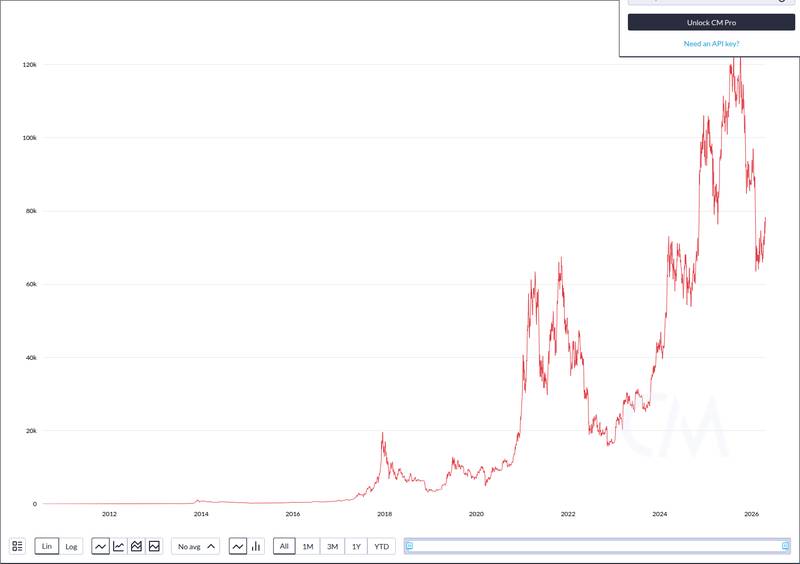
Solana rises over 10%, Ethereum returns above $2,000, BTC breaks through $66,800Solana rose by 10.8%, Ethereum's price rebounded to $2,000, and Bitcoin broke through $66,800 ahead of the traditional futures market opening on Sunday. Cryptocurrency prices saw a significant rebound on Sunday, with Bitcoin rising about 5% to $66,843, after briefly falling below $64,000 on Saturday due to the impact of airstrikes by the US and Israel on Iran. Traders interpreted the confirmation by Iranian state television of Supreme Leader Khamenei's death as a signal that the conflict might be shortened, driving major tokens such as Solana and Ethereum to lead the gains. Despite the notable weekend rebound, weekly performance remains uneven, market liquidity is relatively low, and the subsequent trends in oil prices, stocks, and bonds may affect the sustainability of the cryptocurrency rebound.
07:26
World Liberty Financial Introduces Real-Time Proof of Reserves Powered by ChainlinkWorld Liberty Financial has implemented on-chain, real-time USD1 proof of reserves, utilizing Chainlink to replace delayed attestations.
The upgrade will give users live transparency amid increasing regulatory scrutiny.
Donald Trump-linked World Liberty Financial has launched a real-time proof-of-reserves system for its USD 1 stablecoin, offering real-time on-chain verification using Chainlink standards.
The project announced that the stablecoin industry still depends on delayed attestations, with most tokens releasing quarterly reports. USD1 previously published monthly updates. Those reports lag due to variations in accounting processes. The new approach eliminates that delay by offering real-time reserve visibility.
The stablecoin industry has a transparency problem.
Most rely on quarterly attestations. USD1 already does monthly – better than anyone else. But even monthly attestations have a 1-month reporting delay because accounting takes time.
We just solved that. Thread 👇
— WLFI (@worldlibertyfi) February 27, 2026
Chainlink Runtime Environment will now obtain reserve data from BitGo, verify it, and store it directly on-chain without human intervention. This system runs continuously to offer users access to live collateral information, rather than relying on periodic disclosures. The dashboard shows the total supply USD1 in supported networks, the total reserve backing, and the current collateralization ratio. All information is publicly accessible, and the code is open source for independent review or local use.
The introduction of real-time proof of reserves comes at a time when there has been intense pressure on the USD1 ecosystem. Developers reported that the stablecoin experienced a coordinated attack, during which multiple cofounder accounts were compromised, and influencers were paid to spread FUD.
As we reported, short positions were also opened against WLFI, the project’s native token, and USD1 briefly traded at $0.994 during the incident. The shift to live on-chain reserve reporting is presented as a direct response to concerns raised in the wake of the attack, offering users a clear way to verify the token’s reserve data at any moment.
World Liberty Financial Bank Charter Review
The transparency upgrade comes as the company’s bank charter application faces regulatory scrutiny. During a Senate Banking Committee hearing, Comptroller of the Currency Jonathan Gould said he would consider granting senior lawmakers access to an unredacted version of the application. Senator Elizabeth Warren requested the review to confirm that all required information had been submitted.
Trump’s own bank regulator is reviewing the Trump family's application to form a crypto bank. A company tied to the UAE’s top spy is a co-owner.
The public deserves transparency, so I asked to see the unredacted application.
Here's his response: pic.twitter.com/4XZMz0uBDV
— Elizabeth Warren (@SenWarren) February 26, 2026
Some lawmakers expressed concerns about the company’s ties to the family of President Donald Trump. A spokesperson responded that the firm has met all disclosure requirements. However, the White House has previously stated that the family’s involvement does not create a conflict of interest in the charter process.
As it awaits the lawmakers’ decision, World Liberty Financial recently proposed introducing staking for WLFI holders. The plan offers a 2% annual return for users who stake tokens for at least 180 days and vote on two governance proposals. As we reported, the company stated that the program is intended to support operational needs and broader participation in network decisions.
Despite the launch, WLFI has faced a bearish shift following the recent crypto market crash, trading at
$0.1062
, a
7.4 %
decline.
News